AI Video Marketing for Modern Growth Teams
AI video is no longer experimental. It is operational.
Over the past year, I’ve spoken with Heads of Marketing, growth managers and performance teams who are excited about AI content — yet unsure how to use AI video in a structured, commercial way. They test a few clips, post on social, see some traction… and then stall.
What’s missing isn’t creativity. It’s a clear AI video marketing framework.
In this article, I’ll share the practical structure we use at Splento AI to turn AI video from a novelty into a scalable growth engine. This is not theory. It’s a working AI video marketing strategy designed to reduce time-to-impact and integrate seamlessly into your funnel.
Why Most Teams Struggle with AI Video
AI tools have democratised production. But tools alone do not create results.
Without a defined marketing video framework, teams typically fall into one of three traps:
- Producing random content without funnel alignment
- Over-optimising for views instead of revenue
- Treating AI as a shortcut rather than a strategic capability
The result? Content without direction.
A robust AI video marketing framework solves this by answering three questions:
- Where does AI video sit in our funnel?
- Which AI video use cases drive measurable outcomes?
- How do we build scalable video production without bloating cost or timelines?
Let’s break it down.

The Splento AI Video Marketing Framework
Splento AI is a creative studio specialising in AI-generated cinematic production. We’ve refined a structured approach to help brands move from experimentation to scale.
Our AI video marketing framework has four stages:
1. Define Funnel Intent Before Production
Before discussing formats or visuals, define intent.
Your AI video marketing strategy must align with funnel stages:
- Awareness → High-impact brand storytelling with AI
- Consideration → Product demonstrations and explainer formats
- Decision → Performance-driven creatives for paid acquisition
- Retention → Personalised lifecycle content
This is where many teams get stuck. They produce impressive AI visuals but fail to connect them to conversion objectives.
AI video is not just content. It is a lever within your broader marketing video framework.
2. Map Clear AI Video Use Cases
Not every video needs a film crew. Not every campaign needs a £50,000 production budget.
Effective AI content planning starts by identifying repeatable AI video use cases, such as:
- Paid social performance creatives
- Product launch teasers
- Menu or hospitality concept visualisation
- Event promos
- Brand storytelling with AI for positioning campaigns
- Cross-channel cutdowns for multi-platform rollouts
The advantage? These use cases are modular.
Once defined, they support scalable video production, meaning you can produce multiple variants quickly without starting from scratch each time.
3. Design for Scalable Video Production
Here is where AI shifts from tactical to transformational.
Traditional production is linear: brief → shoot → edit → distribute.
AI production is iterative: concept → generate → refine → deploy → optimise → regenerate.
This cycle enables true scalable video production.
With the right AI video marketing framework, you can:
- Produce 10 creative variations in the time it once took to shoot one
- Test visual concepts before committing to physical production
- Adapt assets across markets without re-filming
This is not about replacing creativity. It’s about accelerating it.
And when teams understand how to use AI video within a system, performance improves dramatically.
4. Measure Impact, Not Just Engagement
A mature video marketing strategy must be tied to metrics beyond impressions.
We advise clients to track:
- Cost per creative variation
- Time from concept to deployment
- Funnel-stage conversion rates
- Incremental performance lift from AI-driven campaigns
This closes the loop in your marketing framework and ensures that content is accountable to commercial outcomes.
How to Use AI Video Across the Funnel
Many teams still ask: how to use AI video without overwhelming workflows?
Awareness: Capture Attention Fast
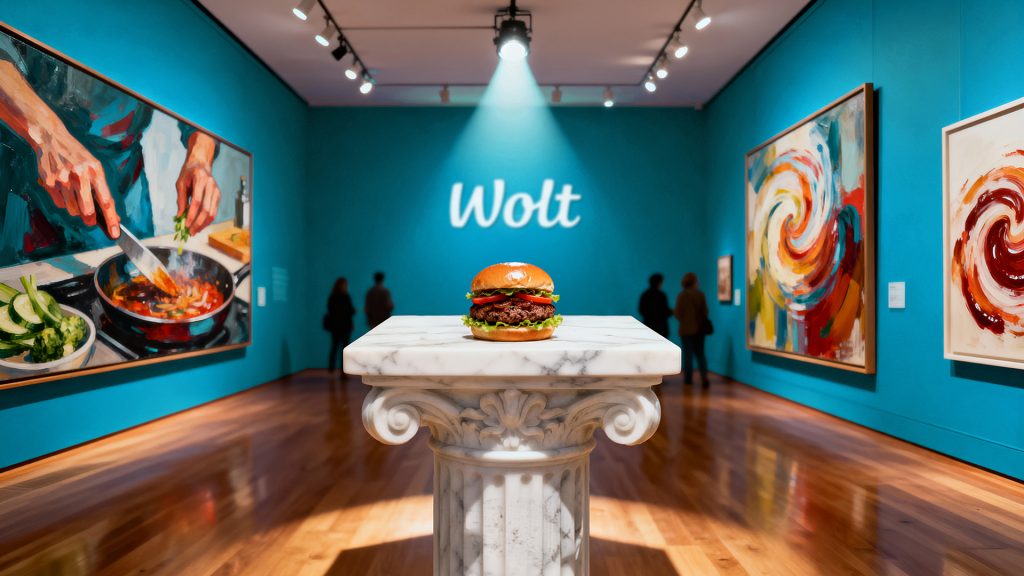
AI excels at imaginative, visually bold concepts. This is ideal for brand storytelling with AI — especially in competitive industries like hospitality, food delivery and lifestyle.
High-impact visuals drive recall.
Consideration: Explain and Differentiate
AI-generated product environments allow you to visualise benefits, simulate scenarios and clarify propositions.
This stage requires tighter messaging within your broader marketing video framework.
Decision: Performance Optimisation
Here, AI supports rapid creative testing. Produce multiple variations of hooks, formats and messaging to optimise paid campaigns.
This is where scalable video production delivers measurable ROI.
Retention: Personalised Content at Scale
Lifecycle campaigns, seasonal updates and CRM-driven visuals become faster and more cost-efficient with AI.
Your AI content planning becomes continuous rather than campaign-based.
The Operational Layer: Why Framework Matters
Without structure, AI video remains experimental. With a defined AI video marketing framework, you gain:
- Speed
- Consistency
- Cost control
- Creative flexibility
At Splento AI, we combine creative direction, prompt engineering and brand alignment into one integrated workflow.
This ensures your marketing isn’t just about generation — it’s about execution excellence.
Common Mistakes to Avoid
Even experienced marketing teams make predictable errors when implementing an AI video marketing framework:
- Treating AI as a one-off tactic rather than embedding it into the marketing video framework
- Skipping structured content planning
- Ignoring brand consistency across AI video use cases
- Scaling production without scaling measurement
AI increases output. Framework ensures quality.
Why This Reduces Time-to-Impact
Speed is not just about production time. It’s about strategic clarity.
When your team knows how to use AI video within a structured framework, you eliminate indecision.
Instead of debating “Should we try AI?”, you focus on:
- Which funnel stage?
- Which AI video use cases?
- Which metrics define success?
This reduces time-to-impact — particularly for startups scaling quickly and growth teams running multi-channel acquisition.

Conclusion
AI video is not a trend. It is an infrastructure shift in how marketing assets are created.
But tools alone do not deliver growth. Structure does.
A practical AI video marketing framework connects creative ambition with commercial clarity. It transforms isolated AI experiments into a coherent AI video marketing strategy. It enables intelligent content planning, supports scalable video production, and defines clear AI video use cases across the funnel.
For marketing leaders, the opportunity is not simply to produce more video. It is to build a system where video becomes faster, smarter and strategically aligned.
At Splento AI, that is exactly what we help teams achieve — turning intelligent production into measurable performance.
Follow Our Journey
If this AI video marketing framework resonated with you, I invite you to stay connected as we continue building and refining it in real time.
🔗 Follow Splento AI for our latest projects, experiments in scalable video production, and practical examples of how brands are implementing AI video marketing strategy across the funnel.
🔗 Follow me on LinkedIn for honest insights into scaling creative teams, navigating AI disruption, and leading a modern studio at the intersection of technology and storytelling.
— Roman Grigoriev,
CEO & Founder
Splento
FAQ
What is an AI video marketing framework?
An AI video marketing framework is a structured approach to planning, producing and deploying AI-generated videos across your marketing funnel. It connects creative output with business objectives, ensuring every video supports your marketing strategy — from awareness campaigns to performance-driven acquisition and retention content.
How do I start using AI video in my marketing?
Start with clear content planning. Define where AI fits within your existing marketing video framework, identify priority AI video use cases, and align production with measurable goals. Begin with one funnel stage, test performance, then expand into scalable video production once results are validated.
Is AI video suitable for enterprise brands?
Yes — when implemented correctly. Enterprise teams benefit from scalable video production, faster creative testing, and cross-channel deployment. A strong AI video marketing framework ensures brand consistency, governance and performance measurement, making AI video a strategic asset rather than an experimental tool.