Post Tagged with: "creative AI"

Lessons from Scaling a Startup in a Fast-Evolving Industry

When we started building Splento AI, we knew one thing for certain: the industry we were entering would not stand still.

AI-driven creative production evolves weekly, sometimes daily. New tools emerge, platforms shift their algorithms, and client expectations change faster than most traditional business models can adapt. Scaling a startup in this environment is not about having a perfect plan — it’s about learning to move forward while the ground beneath you is constantly changing.

Here are a few lessons I’ve learned while scaling Splento AI inside one of the fastest-moving industries today.

1. Speed matters — but clarity matters more

In a fast-evolving market, speed is often seen as the ultimate advantage. Move quickly, launch fast, iterate endlessly. That mindset is partly true — but speed without clarity is dangerous.

Early on, we experimented with many directions: formats, industries, creative approaches, and technical workflows. What made the difference was not moving faster than others, but deciding what not to chase.

For us, clarity came from understanding where AI genuinely creates value for businesses today. Not as a novelty, not as a “nice to have”, but as a practical tool that solves real operational and marketing problems. Once that became clear, scaling decisions became easier, even when the environment stayed unpredictable.

2. Technology does not replace taste, judgment, or responsibility

One of the biggest misconceptions around AI is that it replaces creative thinking. In reality, it amplifies it — for better or worse.

As we scaled, it became obvious that the bottleneck was never the technology. The bottleneck was taste, decision-making, and responsibility for the final output. AI can generate thousands of variations, but someone still needs to decide what is right for a brand, for an audience, and for a specific business goal.

Scaling responsibly in this space means building teams that understand storytelling, brand alignment, and commercial context — not just prompt engineering. Technology accelerates output, but people define direction.

Lessons from Scaling an AI Video Startup

3. Customers don’t buy innovation — they buy outcomes

Startups often fall in love with how innovative their solution is. Clients rarely do.

What clients actually care about is whether something helps them move faster, sell more, reduce friction, or stand out in a crowded market. As we scaled Splento AI, we learned to talk less about how the technology works and more about what changes for the customer once it’s implemented.

In hospitality and food delivery, especially, attention is scarce, and speed is everything. Restaurants don’t want to “experiment with AI”. They want content that helps them launch menus faster, test campaigns quicker, and compete visually with global brands — without enterprise-level budgets or timelines.

Scaling happens when innovation becomes invisible, and outcomes become obvious.

4. Process is what allows creativity to scale

In the early days, creativity often lives in chaos. That’s fine — at the beginning.

But chaos does not scale.

One of the hardest transitions for a creative startup is accepting that process does not kill creativity — it protects it. Clear workflows, repeatable quality checks, and structured collaboration allow teams to produce high-quality work consistently, even under pressure.

At Splento AI, scaling meant turning creative intuition into systems without turning work into something mechanical. The goal was never mass production — it was reliable excellence at speed.

5. The market will educate you — if you listen closely enough

No pitch deck, strategy document, or trend report replaces real conversations with customers.

Some of our most important strategic decisions came directly from listening to friction points: onboarding delays, missing visuals, slow content production cycles, and internal bottlenecks inside marketing teams. 

Scaling in a fast-moving industry requires humility — the willingness to accept that your assumptions will be challenged regularly.

The companies that survive long-term are not the loudest or the most hyped. They are the ones that adjust fastest based on real-world feedback.

6. Growth amplifies culture — not the other way around

Culture does not magically improve as you scale. Growth simply makes existing values louder.

That’s why being intentional early matters. In a high-pressure environment like AI and creative tech, it’s easy to optimise only for output. But long-term growth depends on trust, accountability, and shared standards — especially when teams are moving fast and making decisions daily.

At scale, culture becomes an operating system. If it’s weak, everything slows down.

Looking ahead

Scaling a startup in a fast-evolving industry is not about predicting the future perfectly. It’s about building an organisation that can adapt without losing its identity.

For us, that means staying grounded in creativity, focused on real business outcomes, and honest about what AI can — and cannot — replace. The tools will continue to change. The principles should not.

If you’re building, leading, or scaling in a similar environment, my advice is simple: optimise for learning speed, not just growth speed. The rest follows.


🔗 Follow Splento AI for our newest videos, experiments, and ideas

🔗 Connect with me on LinkedIn for honest insights on scaling creative startups, building with AI, and navigating fast-moving industries — no buzzwords, just real experience.

— Roman Grigoriev,
CEO & Founder
Splento

FAQ

Does AI replace creative teams when a startup scales?

No. AI enhances speed and production capacity, but creative judgement, storytelling, and brand responsibility remain human-led. Scalable creative startups use AI as a tool to amplify talent, not replace it, ensuring outputs remain aligned with business objectives.

How do customer needs influence startup scaling decisions?

Customer feedback plays a critical role in shaping scalable business models. Startups that listen closely to real operational pain points, such as slow content production or onboarding delays, can adapt faster and build solutions that genuinely support growth.

What are the biggest challenges of scaling a startup in a fast-evolving industry?

The main challenges include rapid technology changes, shifting customer expectations, and pressure to move fast without sacrificing quality. Startups must balance speed with strategic clarity, build adaptable processes, and avoid chasing every trend without understanding its long-term business value.

How Fast, Intelligent Content Helps Independent Restaurants Outperform Major Brands

Independent restaurants are not just competing with the place next door anymore — you’re competing with McDonald’s, Starbucks, Domino’s and dark kitchens you’ve never heard of… all stacked above you in the delivery app feed.

From my perspective at Splento AI, working with food and beverage brands around the world, I’m convinced of one thing: the most powerful weapon small restaurants have right now is rapid, intelligent content. Not a “nice to have”, but a core competitive advantage.

In this blog, I want to share how I see that working in practice — and how you can use fast, agile content to punch far above your weight against global brands.

The new high street is the feed

Yes, location still matters. But for many of your customers, the first interaction with your restaurant happens through a screen:

  • A delivery app carousel
  • A 6-second vertical video
  • A TikTok recommendation or a friend’s Instagram Story

On that tiny screen, your 30-seat independent restaurant is quite literally next to multinational chains with seven-figure media budgets.

The good news? On the feed, attention doesn’t care about the size of your marketing department. It cares about:

  • How fast you show up with something relevant
  • How fresh and visually interesting it looks
  • Whether it feels real, local and emotionally resonant

This is where rapid content becomes a strategy, not just “posting more”.

Why big brands win by default (and why that’s changing)

Let’s be honest about why global brands so often win by default:

  • They have agencies producing polished campaigns
  • They have entire teams optimising every thumbnail and caption
  • They buy reach through paid ads across every major platform

But they also have a weakness: they are slow.

Every concept, slogan and visual goes through legal, brand, and regional approvals and a committee of people who have never worked a dinner rush in their lives.

Independent restaurants, on the other hand:

  • See trends earlier (because your customers talk to you in real life)
  • Can decide on a concept at 11:00 and film it at 11:30
  • Can test an idea tonight and improve it tomorrow, without waiting for sign-off

If you connect that agility with a solid creative system (and the right tools), you suddenly have a way to compete where size is no longer the advantage.

What I actually mean by “rapid content”

“Rapid content” is not about posting anything and everything.

For me, rapid content is:

  1. Fast to produce – hours or days, not weeks
  2. Native to the platform – vertical video, short, high-impact, optimised for the feed
  3. Testable – different hooks, captions, visuals you can compare quickly
  4. Reusable – one creative idea repurposed across multiple formats and channels

Splento AI was built around exactly this idea: combining creative direction, storytelling and AI-powered video production so brands can get cinematic, on-brand visuals at speed and scale.

For restaurants, this matters because the opportunity window is small. A trending flavour, a new combo deal, a seasonal menu, a viral sound on TikTok — if you’re reacting two weeks late, you’re invisible.

The unfair advantage restaurants already have

Here’s the part I love: restaurants are naturally better storytellers than most brands. You just rarely formalise it as “content”.

You already have:

  • Real people with personality (chefs, waiters, owners, regulars)
  • Visually rich environments (steam, neon, grills, pizza ovens, latte art)
  • Built-in rituals (Friday nights, match days, brunches, birthdays)
  • Authentic local context (your street, your neighbourhood, your city culture)

Global brands spend millions trying to simulate this authenticity in studio sets.

You can capture it today.

When we build AI-driven concepts for food brands, this is always our starting point: make the food and the experience feel alive, not generic.

A simple, rapid-content system any restaurant can use

You don’t need a huge strategy deck to start. You need a repeatable rhythm.

Here’s a simple structure I recommend to restaurateurs I speak with:

1. Daily: Micro-moments

These are 5–15 second clips you can capture on a smartphone:

  • One beautiful close-up (sauce pour, garnish, flame, grill, steam)
  • One “human” shot (chef plating, bartender shaking, team laughing)
  • One scene-setting shot (exterior, sign, full table, interior detail)

Use them as:

  • Instagram Reels / TikTok
  • Stories
  • Short YouTube Shorts

The goal: stay present in the feed and keep reminding people, “We exist. We look good. We’re nearby.”

2. Weekly: Hero creative

Once a week, create one slightly more considered piece of content:

  • A mini-story about a signature dish
  • A “delivery fantasy” (how you wish food could teleport to your customers)
  • A fun “if our restaurant were a movie trailer” concept
  • A collaboration highlight with delivery platforms

This is where AI video becomes incredibly useful. You can take a simple idea — “shawarma in a cinematic Middle Eastern night market” or “Big Ben in a Stranger Things-style upside-down world for a London pub” — and turn it into a scroll-stopping creative without shutting the restaurant down for a full-day shoot.

3. Monthly: Campaign theme

Pick one clear message per month, and align your content around it:

  • “Winter comfort bowls delivered in 20 minutes”
  • “Match-day sharing boxes for groups of four”
  • “Lunch in under 10 minutes for nearby offices”

Rapid content then becomes structured: every daily micro-moment and weekly hero ties back to a campaign idea that actually drives sales, not just likes.

Where AI video fits in

Here’s how our clients use AI-generated video alongside their own clips:

  • To visualise impossible scenes (pizza ovens as rocket engines, gyros on Olympus) that would cost a fortune to film for real
  • To create multiple creative variations quickly – different backgrounds, moods, energy levels – so you can test which story actually makes people click “Order”
  • To keep feeds fresh between real shoots, without sacrificing visual quality

At Splento AI, we designed our production to blend creative direction, prompt engineering and visual design into brand-ready videos that still feel rooted in your concept, not generic stock.

Used well, AI is not a gimmick — it’s an accelerator for the ideas you already have but don’t have time or budget to produce.

“But Roman, we don’t have time/people/confidence for all this…”

I hear the same three objections from restaurant owners all the time.

1. “We don’t have time.”

You don’t have time to set up a full video shoot every week. I agree.

But you do have 10–15 minutes a day to:

  • Capture three tiny moments on your phone
  • Drop them into a shared folder or WhatsApp
  • Approve a couple of captions on the go

The heavy lifting — editing, formatting, AI visuals, platform-specific tweaks — can be outsourced to partners like us. Your job is to keep the raw stories flowing.

2. “We’re not good on camera.”

Good. People are tired of overly polished, corporate videos.

Use voice-over, text-on-screen or AI-driven scenes if you’re camera-shy. The important thing is that the content feels like your place, not a template.

3. “We tried posting and saw nothing.”

In most cases, the problem is inconsistent volume and unclear goals, not the platform.

Content works when:

  • You post often enough to actually get data
  • You know what you want each piece to do (awareness/click-through/offer redemption)
  • You improve based on what you see rather than restarting from scratch every month

This is exactly how we approach content in general: with a clear understanding of audience, intent and focus, not random activity that never ranks or converts.

A 7-day rapid-content experiment you can start next week

If you want something concrete, try this one-week test:

Day 1 – Decide the theme
Pick one simple, specific focus: “Late-night delivery comfort food” or “Office lunch in under 15 minutes”.

Days 2–6 – Capture daily micro-moments
Each day, capture:

  • One dish close-up linked to the theme
  • One team moment
  • One interior/exterior vibe shot

Send them to your content partner with a single sentence about what you want to highlight.

Let AI help generate a hero concept for the end of the week: a short, cinematic spot that exaggerates your promise (e.g. food arriving like magic, or your restaurant reimagined as a film universe).

Day 7 – Publish your hero video and review
Post your weekly hero across platforms, boosted if budget allows.

Then look at:

  • Which daily clips got the most saves, shares or link clicks
  • Which hooks or visuals performed better (“steamy close-up” vs “happy customers”)
  • What comments or DMs you received

Repeat the experiment next week with a refined theme. In a month, you’ll be operating like a brand with a content team — without actually having one.

Final thought: speed is now a brand value

In a world where global brands can outspend you on everything, speed is the one area where you can genuinely outperform them.

Rapid content is not about chasing every trend. It’s about:

  • Showing up consistently in the digital spaces where orders are made
  • Responding quickly to what your audience actually reacts to
  • Using new tools, including AI video, to multiply your creativity, not replace it

As a founder, I’m biased, of course. At Splento AI, we built our production precisely for food brands that want this speed and creativity without burning out their teams.

But even if we never work together, I’d encourage you to ask one question this week:

“If our content moved twice as fast, what would that change for our restaurant?”

If the honest answer is “quite a lot”, then it’s time to treat rapid content as seriously as your menu, your margins and your location — because for many of your future customers, it is your restaurant.

Roman Grigoriev,
CEO & Founder
Splento

🔗 Join me on LinkedIn for daily thoughts, backstage stories, and honest discussions about running a creative startup in today’s AI-driven world.

FAQ

1. What exactly is “rapid content” for restaurants?

Rapid content refers to fast, platform-native creative assets: short-form videos, behind-the-scenes clips, and AI-enhanced visuals, produced quickly and consistently. Unlike traditional campaigns that take weeks, rapid content can be created in hours or days, allowing restaurants to stay relevant, agile and visible in crowded delivery feeds.

2. Can independent restaurants really compete with global brands through content?

Yes — and rapid content is precisely how smaller brands level the playing field. While large chains have bigger budgets, they are slower to act. Restaurants that produce creative, timely content can outperform major brands in social feeds, capture local attention, and build real loyalty through authenticity.

3. How does AI video fit into a restaurant’s content strategy?

AI video is not a replacement for real footage — it’s a creative multiplier. AI enables restaurants to create cinematic, imaginative visuals (e.g., food in impossible settings, stylised dish reveals, storytelling concepts) at a fraction of the cost and time of traditional production. It helps keep content fresh, gives campaigns a visual identity and allows for fast A/B testing of creative ideas.

Starting a New Chapter! Why We Built Splento AI — And What Comes Next for Intelligent Video

When we first began experimenting with AI-generated video at Splento, the goal was simple: make creativity radically accessible. We wanted to empower businesses — especially those moving at the speed of hospitality and food delivery — to create cinematic, scroll-stopping video content without the constraints of traditional production.

Today, that idea has grown into Splento AI, a full creative studio where design, storytelling and intelligence meet. We blend human imagination with advanced generative technology to produce brand-ready videos at speed, scale, and a level of visual quality that was impossible even a year ago.

Launching this blog marks a new chapter. It’s where I’ll share not just our work, but the thinking behind it: industry trends, creative insights, lessons from building a startup in the AI era, and stories from the Splento AI team.

Why We Stepped Into AI Video Production

After years of producing photography and video for global brands, one challenge kept repeating:
businesses needed high-quality content faster than traditional production could physically supply it.

Hospitality and delivery platforms, in particular, operate in real time. Menus change, campaigns roll out overnight, seasonal items come and go — and yet the expectation for flawless video content only grows.

AI changed that equation.

With Splento AI, we can help a restaurant or food delivery brand transform a creative concept into a cinematic video in hours, not weeks. We can prototype multiple campaign ideas instantly. We can iterate, refine, and customise visuals at a speed matching the pace of their business.

Most importantly, AI lets us say yes to creative ideas that would once require entire film crews, heavy equipment, or inaccessible budgets.

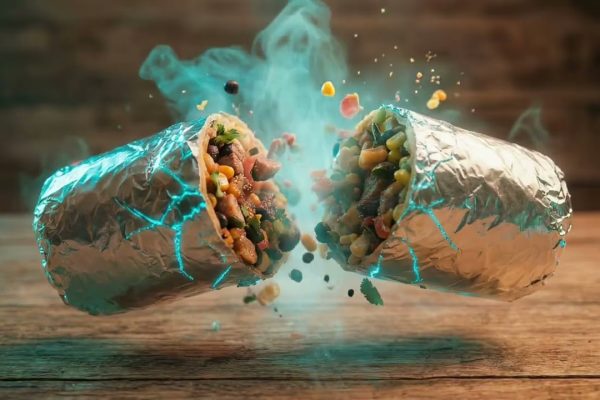
A flaming burrito in a cinematic movement?
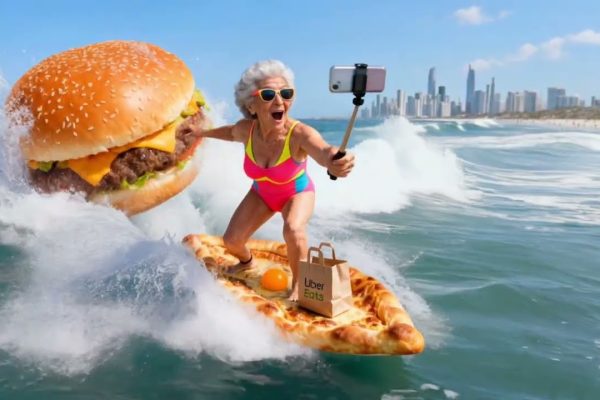
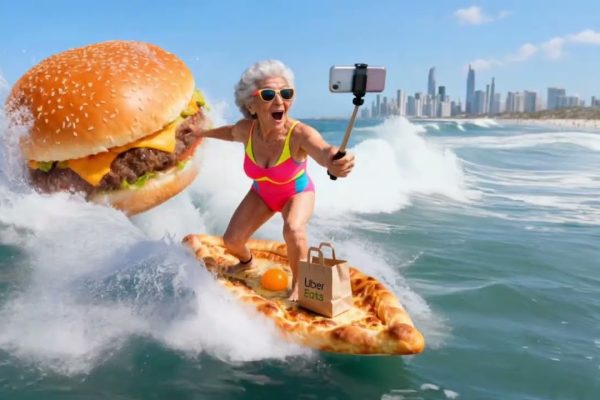
A grandmother surfing with an Uber Eats bag?
A Guinness can, launching like a rocket?

These are no longer “fun hypotheticals” — they’re live assets on our timeline.

Meet the Creative Team Behind the Magic

Splento AI is built by creatives who come from production, not just prompt engineering.
Our team blends:

  • Art direction & concept design
  • Narrative development & storytelling
  • Advanced AI video generation & editing
  • Brand-aligned campaign thinking
  • Visual design and motion refinement

We translate abstract ideas into emotionally compelling visuals — always shaped around the brand voice, customer psychology, and commercial goals.

And yes, AI is not a replacement for creativity — it’s an accelerator.

Why AI Video Matters Right Now— Especially in Hospitality & F&B

If you operate a restaurant, café, dark kitchen, hotel bar, or a food delivery brand, you’re already feeling the pressure:

  • Rising competition
  • Shrinking attention spans
  • High content demand across TikTok, YouTube Shorts, and Instagram
  • Constant need for menu updates, seasonal campaigns, and localisation
  • Tight margins that make traditional production hard to justify

AI video solves these pain points in ways the industry has not seen before:

1. Unlimited creativity without production delays

You can test five creative directions before lunch — and choose the one that resonates.

2. Rapid iteration for fast-moving menus

New dish launching tomorrow? You can have a promo ready tonight.

3. Cost-effective content at scale

Produce an entire campaign for the price of a single traditional shoot day.

4. Localisation at scale

One hero video can be adapted into 20 culturally relevant variations for different regions, cuisines, or delivery platforms.

5. A competitive edge in storytelling

In a saturated market, strong visuals are no longer a luxury — they’re a survival tool.

What Splento AI Offers

We help brands transform ideas into cinematic assets through:

  • AI video production & editing
  • Concept ads & promotional visuals
  • Social-first F&B campaigns
  • Brand storytelling through intelligent video
  • Creative direction, moodboards, visual strategy
  • Prompt engineering for consistent brand identity
  • Full campaigns crafted in hours, not months

Our focus is simple: videos that drive appetite, attention, and action.
And we build them with the precision and creativity the hospitality sector demands.

What’s Coming on This Blog

In upcoming articles, I’ll be writing about:

  • The future of AI in hospitality and food delivery
  • Creative strategy in the age of intelligent video
  • How restaurants can compete with global brands through rapid content
  • Lessons from scaling a startup in a fast-evolving industry
  • Behind-the-scenes stories from Splento AI studios
  • Practical frameworks for using AI video in your marketing

My goal is to make this blog useful, honest, and inspiring — a resource for business leaders navigating a new creative era.

A Personal Note

Splento began over a decade ago with a simple mission: to make high-quality visual content accessible for everyone. Today, Splento AI is the next evolution of that mission.

AI is not the future.
It’s already reshaping how brands communicate today.

And we’re here to help you stay ahead of that curve.

Follow Our Journey

If you’re in the hospitality, F&B, or creative industry — or simply curious about the future of intelligent video — I invite you to follow along.

🔗 Follow Splento AI for our newest videos, experiments, and ideas
🔗 Connect with me on LinkedIn for daily insights, behind-the-scenes updates, and honest conversations about leading a creative startup in the age of AI

This is just the beginning.
Let’s build the future of visual storytelling — together.

Roman Grigoriev
CEO & Founder
Splento